A good engineer doesn't watch a session replay from beginning to end.
They orient. Skim the timeline for the anomaly. Jump to the moment. Open devtools. Read the console and stack trace at that timestamp. Compare what the page looked like before and after. Zoom out, zoom in, one layer at a time, until the answer is small enough to hold in their head.
There's a piece of software that perfected this motion years ago: the map in your pocket.
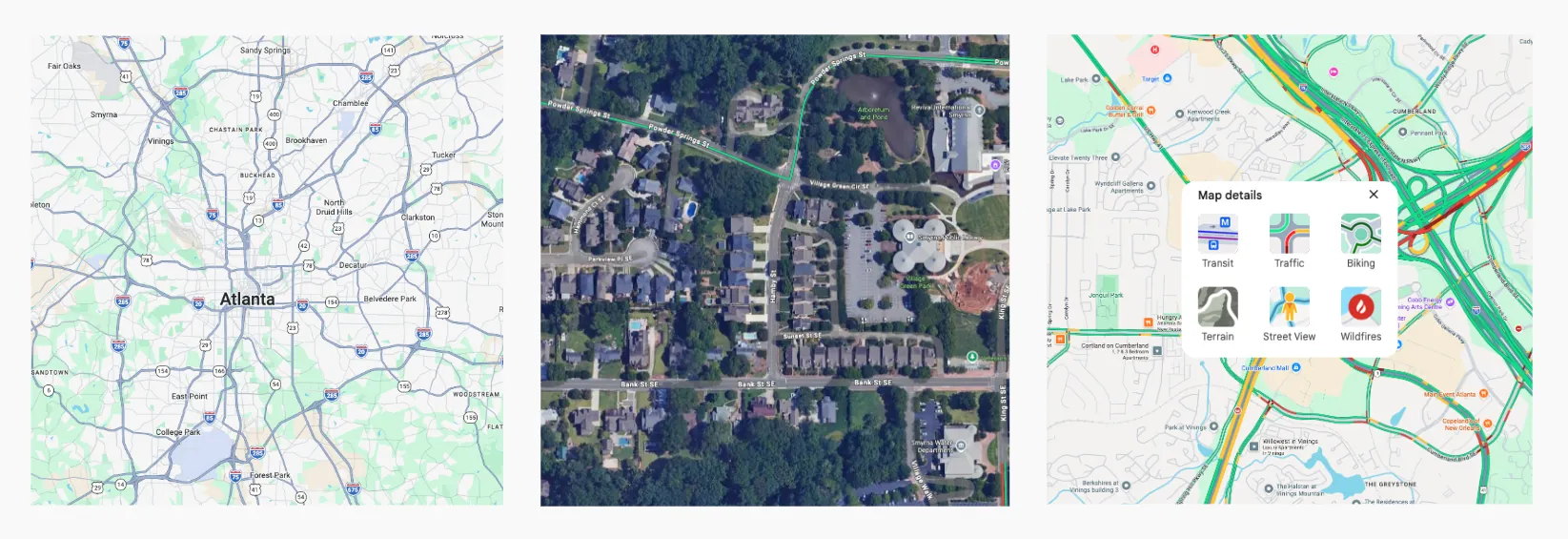
A map focuses attention without losing context.
Google Maps compresses the planet onto a screen, then lets you move fluidly between levels of detail. Start with the city. Zoom into the neighborhood. Drop to street level. Toggle the traffic layer when traffic is the question.
That's the idea behind Agentic Session Review in Subtext. We've given the agent you already use a map of what happened in a real production session.
The agent can start with the whole session: where friction appears, where errors cluster, where the experience went off course. Then it can zoom into a timestamp, compare two moments, or inspect a specific layer—user actions, console output, network calls, pixels, or the accessibility tree.
These are MCP tools, not a dashboard.
Your agent drives the investigation, not ours.
Most attempts to automate session replay put someone else's model between you and the session. The captured session goes to a model you didn't choose, the model decides what matters, and you get its conclusion. From there, one of two things happens.
If it summarizes the session upfront, it compresses too early. "The user struggled at checkout" may be true, but the root cause could be a config response missing one field two events before the crash. You can't recover a detail the summary decided wasn't important.
If the model processes the replay frame by frame, it preserves the detail but wastes attention. A thousand nearly identical frames pour into the context window when the signal lives in three of them—plus a network request the pixels can't show.
Anyone who has scrubbed replay at 2x knows the feeling. Trevor Loucks put it in words we've never topped: "Watching session replays is my personal hell. I wish the ROI wasn't so high."
Agents don't hate it at all. They'll dutifully process every frame you pay for, which is worse. 💸
Either way, a model you don't control decides what you see.
Subtext gives the agent you already use a third option: a map. It can compress the session without flattening it, holding only what the question needs while keeping the underlying evidence one tool call away.
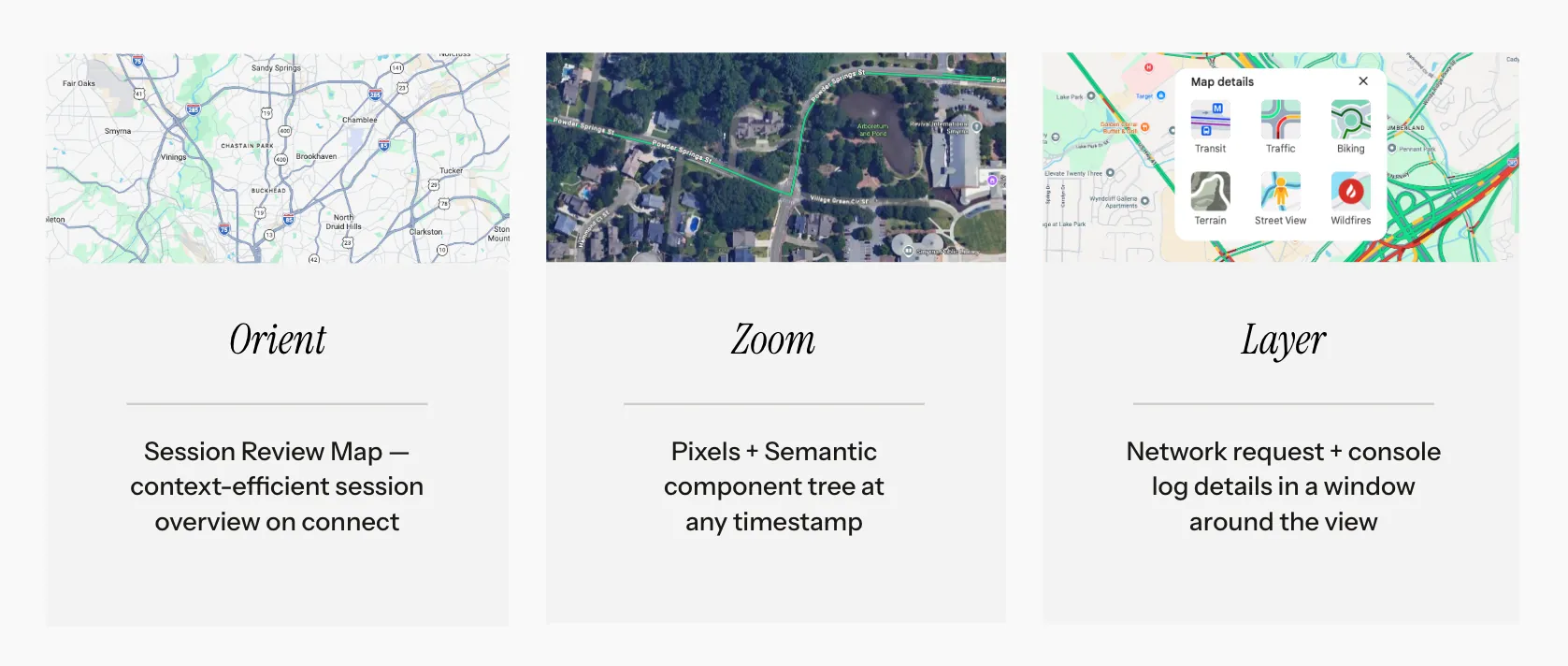
Of course, a map is only as good as its survey data. Subtext draws on Fullstory capture: a decade of recording sessions faithfully enough to reconstruct any moment and cost-effective enough that you can leave it running everywhere. An agent can't investigate details that were never preserved.
That changes what session replay is for.
Session replay gave humans a way to watch what happened. Agentic Session Review gives agents a way to investigate it—and act on what they find.
As James Friend, an engineer at Clay and one of our design partners, put it:
"We run our Sentry alerts through Subtext, so instead of a vague exception, we get the actual user impact, repro steps, and a validated fix. The screenshots of the broken UI a real user experienced motivate the owning team to prioritize it."
Subtext is available today. Give your agent the map it needs to see, diagnose, and fix what actually happened.
1npx @subtextdev/subtext-wizardNot ready to install? Take it for a spin in the playground.